Pauli exclusion principle
No two fermions can share identical quantum states.
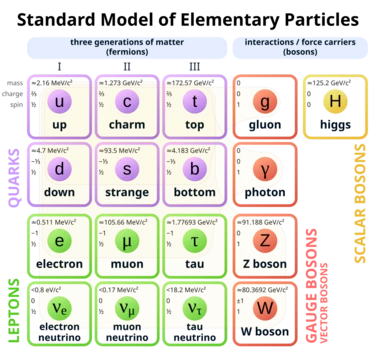
The Pauli exclusion principle is a foundational rule in quantum mechanics that governs the behavior of fermions—particles possessing half-integer spin, such as electrons, quarks, and neutrinos. Formulated by Austrian physicist Wolfgang Pauli in 1925 for electrons, the principle was later generalized to all fermions through his spin–statistics theorem of 1940. It states that no two identical fermions within a quantum system can occupy the same quantum state simultaneously. For electrons in an atom, this means that no two electrons can share identical values for all four quantum numbers: the principal quantum number, the azimuthal quantum number, the magnetic quantum number, and the spin quantum number. If two electrons are in the same orbital, their first three quantum numbers are equal, so their spin projections must differ—one being +1/2 and the other −1/2. This restriction does not apply to bosons, particles with integer spin, which can occupy the same state in unlimited numbers, as seen in lasers or Bose–Einstein condensates. The principle is mathematically justified by the symmetry of the total wave function: exchanging two identical fermions changes the wave function’s sign (antisymmetry), while for bosons it remains unchanged. If two fermions were in the same state, swapping them would leave the wave function unchanged, yet antisymmetry requires a sign change—a contradiction resolved only if the wave function is zero, meaning such a state cannot exist. This principle explains the stability of everyday matter and the chemical behavior of atoms, and it underpins the structure of the periodic table, as Pauli realized by connecting electron shell numbers to the four quantum numbers, including the two-valued spin quantum number introduced after work by Samuel Goudsmit and George Uhlenbeck.
- formulated_by
- Wolfgang Pauli
- particles_affected
- fermions (half-integer spin)
- particles_not_affected
- bosons (integer spin)
- key_quantum_numbers
- n, ℓ, mℓ, ms
Lore & Background
In the early 20th century, it became evident that atoms with even numbers of electrons are more chemically stable. Lewis postulated that atoms tend to hold an even number of electrons in any given shell. Pauli sought an explanation for these empirical numbers while also trying to explain the Zeeman effect and ferromagnetism. Stoner, which showed that for a given principal quantum number, the number of energy levels of a single electron in an alkali metal spectrum in an external magnetic field equals the number of electrons in the closed shell of noble gases. This led Pauli to realize that the complicated electron numbers could be reduced to one electron per state if four quantum numbers were used, introducing a new two-valued quantum number later identified as electron spin by Samuel Goudsmit and George Uhlenbeck.
Reader's Guide
The Pauli exclusion principle is a cornerstone of quantum mechanics, explaining why matter is stable and why atoms exhibit their characteristic chemical properties. It dictates that fermions—particles with half-integer spin such as electrons, protons, neutrons, and quarks—cannot occupy identical quantum states. For electrons in atoms, this means no two electrons can share the same set of four quantum numbers (n, ℓ, mℓ, ms), forcing them into different orbitals or opposite spins. This principle accounts for the structure of the periodic table, the behavior of electrons in solids, and the stability of ordinary matter. Bosons, with integer spin, are not subject to this rule and can occupy the same state, as seen in lasers and Bose–Einstein condensates. The principle is rigorously justified by the requirement that the total wave function of fermions be antisymmetric under particle exchange, which mathematically forbids identical states. Without this principle, all electrons would collapse into the lowest energy state, making complex chemistry and life impossible.
Did You Know?
- Particles with integer spin (bosons) are not subject to the Pauli exclusion principle; any number of identical bosons can occupy the same quantum state.
- The principle explains why in a poly-electron atom, two electrons in the same orbital must have opposite spins (ms = +1/2 and -1/2).
- The rigorous justification is that the total wave function for fermions must be antisymmetric under exchange of two identical particles, which forces the wave function to zero if they are in the same state.
Frequently Asked Questions
What are Pauli exclusion principle's powers/role?
It forbids two identical fermions—particles with half-integer spin—from occupying the exact same quantum state simultaneously. In an atom, this means no two electrons can share the identical set of four quantum numbers (n, ℓ, mℓ, ms).
Why is Pauli exclusion principle important?
Without it, every electron in an atom would collapse into the lowest energy orbital, eliminating shell structure entirely. The principle is what gives matter its volume, organizes the periodic table, and makes chemistry possible.
Which particles does Pauli exclusion principle affect, and which does it spare?
It applies strictly to fermions—half-integer-spin particles like electrons, protons, and neutrons. Bosons, which carry integer spin (photons, gluons, etc.), are completely exempt and may occupy the same quantum state in unlimited numbers.
More in Particle And Nuclear Physics 1-24
Spotted an error? Know more?
This is a living reference — every entry is fact-audited, and reader corrections feed straight into our audit queue. Suggest an edit · See this site's audit record