Radioactive decay
Unstable atomic nuclei lose energy by emitting radiation.

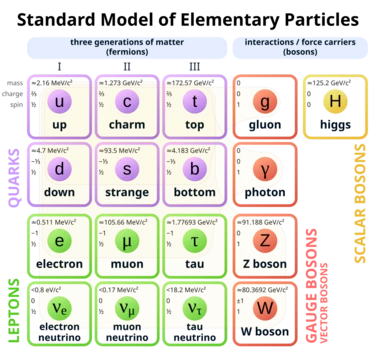
Radioactive decay, also known as nuclear decay or radioactivity, is the process by which an unstable atomic nucleus loses energy by emitting radiation. A material containing unstable nuclei is considered radioactive. The three most common types of decay are alpha, beta, and gamma decay, with beta decay governed by the weak force and the others by electromagnetic and nuclear forces. Radioactive decay is a random process at the level of single atoms, but for large numbers of identical atoms, the overall decay rate can be expressed as a decay constant or half-life. The decaying nucleus is called the parent radionuclide, and the process produces at least one daughter nuclide, often resulting in a different chemical element.
- key_contributors
- Henri Poincaré, Julius Elster, Hans Geitel, Ernest Rutherford, Frederick Soddy, Pierre Curie
- field
- Nuclear physics, chemistry
- known_for
- Process by which unstable atomic nuclei lose energy via radiation; discovery led to nuclear transmutation and modern nuclear medicine
- types_of_decay
- Alpha, beta, gamma decay
- unit_of_activity
- Becquerel (Bq) – one decay per second; older unit: curie (Ci)
Lore & Background
Becquerel wrapped a photographic plate in black paper and placed uranium salts on it, which caused blackening. Marie Curie named the radiation 'Becquerel Rays' and showed they were a property of atoms.
Reader's Guide
Radioactive decay is fundamental to understanding nuclear physics and chemistry. This led to the identification of primordial radionuclides—28 naturally occurring radioactive elements on Earth, including uranium, thorium, and potassium-40. The random nature of decay at the atomic level, governed by quantum theory, means half-lives range from nearly instantaneous to longer than the age of the universe. The SI unit of activity, the becquerel, honors Henri Becquerel. The legacy of radioactive decay includes nuclear medicine, energy production, and ongoing radiation safety protocols.
Did You Know?
- Radioactive decay is a random process; it is impossible to predict when a particular atom will decay, regardless of how long it has existed.
- There are 28 naturally occurring radioactive chemical elements on Earth, consisting of 35 primordial radionuclides that date before the formation of the Solar System.
- Marie Curie died from aplastic anaemia, likely caused by exposure to ionizing radiation.
- The curie, an older unit of radioactivity, was originally defined as the quantity of radium emanation in equilibrium with one gram of radium.
More in Particle And Nuclear Physics 1-24
Elsewhere in the Particle And Nuclear Physics universe
Spotted an error? Know more?
This is a living reference — every entry is fact-audited, and reader corrections feed straight into our audit queue. Suggest an edit · See this site's audit record