Quantum electrodynamics
Relativistic quantum field theory of light and matter interaction.

Quantum electrodynamics (QED) is the relativistic quantum field theory of electrodynamics that describes how light and matter interact. It is the first theory to achieve full agreement between quantum mechanics and special relativity, mathematically describing all phenomena involving electrically charged particles interacting through the exchange of photons. QED represents the quantum counterpart of classical electromagnetism and is the most precise and stringently tested theory in physics.
- field
- Particle physics, quantum field theory
- known_for
- Describing light-matter interaction, renormalization, extremely accurate predictions
- key_contributors
- Paul Dirac, Richard Feynman, Julian Schwinger, Shin'ichirō Tomonaga, Freeman Dyson
- notable_predictions
- Anomalous magnetic moment of the electron, Lamb shift of hydrogen energy levels
- associated_problem
- Cosmological constant problem (vacuum catastrophe)
Lore & Background
The first formulation of a quantum theory describing radiation and matter interaction is attributed to Paul Dirac, who during the 1920s computed the coefficient of spontaneous emission of an atom and coined the term 'quantum electrodynamics.' Dirac described the quantization of the electromagnetic field as an ensemble of harmonic oscillators, introducing creation and annihilation operators. A possible solution came from Hans Bethe in 1947, who made the first non-relativistic computation of the shift of hydrogen atom lines as measured by Willis Lamb and Robert Retherford. Bethe's idea was to attach infinities to corrections of mass and charge that were fixed to finite values by experiments, a procedure named renormalization. Based on Bethe's intuition and fundamental papers by Shin'ichirō Tomonaga, Julian Schwinger, Richard Feynman, and Freeman Dyson, fully covariant formulations were produced that were finite at any order in perturbation theory. Tomonaga, Schwinger, and Feynman were jointly awarded the 1965 Nobel Prize in Physics for their work. Feynman's mathematical technique, based on his diagrams, initially seemed unlike the operator-based approach of Schwinger and Tomonaga, but Dyson later showed the two approaches were equivalent.
Reader's Guide
Quantum electrodynamics is the model and template for all subsequent quantum field theories, including quantum chromodynamics and the electroweak theory. Its development resolved the apparent incompatibility between special relativity and quantum mechanics by introducing renormalization, a procedure that absorbs infinities into physically measured constants like mass and charge. This allowed for extremely accurate predictions of quantities such as the anomalous magnetic moment of the electron and the Lamb shift, making QED the most precisely tested theory in physics. Richard Feynman called it 'the jewel of physics' for this reason. Despite its success, both Feynman and Dirac were uncomfortable with the mathematical validity of renormalization, with Feynman referring to it as a 'shell game' and 'hocus pocus.' QED's legacy lies in its role as a foundational framework for modern particle physics, demonstrating how perturbation theory and gauge invariance can yield testable predictions, while also highlighting unresolved issues in fundamental physics.
Did You Know?
- Richard Feynman called QED 'the jewel of physics' for its extremely accurate predictions.
- Hans Bethe made the first non-relativistic computation of the Lamb shift in 1947, leading to the development of renormalization.
- Feynman was never entirely comfortable with renormalization, referring to it as a 'shell game' and 'hocus pocus.'
The Jewel of Physics: What QED Achieves
Quantum electrodynamics stands as the relativistic quantum field theory that governs how light and matter interact. It is the first framework in which quantum mechanics and special relativity achieve full mathematical harmony, describing every phenomenon in which electrically charged particles communicate through the exchange of photons. In doing so, QED serves as the quantum counterpart of classical electromagnetism, offering what physicists consider a complete account of matter-light interaction. Richard Feynman famously dubbed it "the jewel of physics," a title earned by its extraordinarily accurate predictions of quantities such as the electron's anomalous magnetic moment and the Lamb shift in hydrogen's energy levels. It remains the most precisely tested theory in all of physics. Yet this triumph carries a shadow: QED's prediction of vacuum zero energy diverges from experimental observation by a factor on the order of 10 to the 120th power, a discrepancy known as the cosmological constant problem or vacuum catastrophe, which remains one of the deepest unresolved puzzles in theoretical physics.
From Dirac's Vision to the Infinity Crisis
Paul Dirac is credited with the first formulation of a quantum theory describing radiation-matter interaction in the 1920s, computing the coefficient of spontaneous atomic emission and coining the very term "quantum electrodynamics." He modeled the quantized electromagnetic field as an ensemble of harmonic oscillators, introducing creation and annihilation operators for particles. Over the following years, contributions from Wolfgang Pauli, Eugene Wigner, Pascual Jordan, Werner Heisenberg, and Enrico Fermi led physicists to believe that, in principle, any computation involving photons and charged particles was possible. That optimism shattered in 1937 and 1939 when Felix Bloch with Arnold Nordsieck, and Victor Weisskopf, demonstrated that calculations were reliable only at first order in perturbation theory—a limitation Robert Oppenheimer had already flagged. At higher orders, infinities erupted, rendering computations meaningless and suggesting that special relativity and quantum mechanics might be fundamentally incompatible. By the late 1940s, improved microwave technology enabled precise measurements of the hydrogen Lamb shift and the electron's magnetic moment, exposing discrepancies the existing theory could not explain.
Bethe's Breakthrough and the Renormalization Triumph
In 1947, Hans Bethe offered the first indication of a solution by performing a non-relativistic computation of the hydrogen line shifts measured by Willis Lamb and Robert Retherford. Despite its limitations, the result matched experiment with excellent agreement. His key insight was to attach the infinities to corrections of mass and charge—quantities already fixed to finite values by experiment—so that the infinities were absorbed into those constants, yielding finite results. This procedure, named renormalization, became a cornerstone of quantum field theory. Building on Bethe's intuition, Shin'ichirō Tomonaga, Julian Schwinger, Richard Feynman, and Freeman Dyson produced fully covariant formulations finite at any order of perturbation. Tomonaga, Schwinger, and Feynman shared the 1965 Nobel Prize in Physics. Dyson later demonstrated that Feynman's diagram-based technique was equivalent to the operator-based approach of Schwinger and Tomonaga. Yet Feynman himself remained uneasy, dismissing renormalization as a "shell game" and "hocus pocus," a discomfort Dirac shared.
Template for Modern Physics and Feynman's Public Legacy
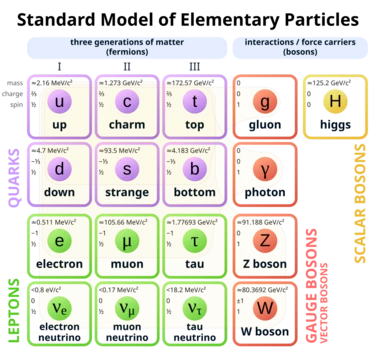
QED's influence extends far beyond its own domain. It serves as the model and template for all subsequent quantum field theories. Quantum chromodynamics, which began in the early 1960s and reached its present form in the 1970s through the work of H. David Politzer, Sidney Coleman, David Gross, and Frank Wilczek, followed QED's structural blueprint. Similarly, building on Schwinger's pioneering contributions, Gerald Guralnik, Dick Hagen, Tom Kibble, Peter Higgs, Jeffrey Goldstone, Sheldon Glashow, Steven Weinberg, and Abdus Salam independently demonstrated how the weak nuclear force and QED could be merged into a single electroweak interaction. Near the end of his life, Feynman delivered a series of lectures on QED intended for a general audience, later published as QED: The Strange Theory of Light and Matter (1985). In that classic non-mathematical exposition, he distills the theory into three basic actions: a photon traveling between two spacetime points, an electron doing the same, and an electron emitting or absorbing a photon at a vertex. He pairs these with probability amplitudes, where probability equals the square of the absolute value of the total amplitude.
Frequently Asked Questions
Who is Quantum electrodynamics?
QED is the relativistic quantum field theory that governs how photons and electrically charged particles interact. It stands as the first framework to fully merge quantum mechanics with special relativity in a single consistent description of light and matter.
What are Quantum electrodynamics's powers/role?
It mathematically accounts for every phenomenon where charged particles exchange photons, from atomic spectra to high-energy scattering. Its most celebrated predictions—the electron's anomalous magnetic moment and the Lamb shift in hydrogen—match experimental measurements to extraordinary precision.
Why is Quantum electrodynamics important?
It is the most precisely tested theory in all of physics and serves as the mathematical template for every other quantum field theory that followed. Its development of renormalization gave physicists the tools to tame infinities, a technique now central to the entire Standard Model.
Who are Quantum electrodynamics's key allies?
The theory crystallized through the parallel work of Paul Dirac, Richard Feynman, Julian Schwinger, Shin'ichirō Tomonaga, and Freeman Dyson in the late 1940s and early 1950s. Dyson in particular demonstrated that these independent formulations were mathematically equivalent, unifying the field into its modern form.
More in Particle And Nuclear Physics 25-40
Elsewhere in the Particle And Nuclear Physics universe
Spotted an error? Know more?
This is a living reference — every entry is fact-audited, and reader corrections feed straight into our audit queue. Suggest an edit · See this site's audit record