Tevatron
Highest-energy particle collider until the Large Hadron Collider.

The Tevatron was a circular particle accelerator at the Fermi National Accelerator Laboratory (Fermilab) in the United States, east of Batavia, Illinois.
Lore & Background
Wilson to use superconducting magnets in the same tunnel as the existing Main Ring. The Tevatron ceased operations on September 30, 2011, due to budget cuts and the completion of the more powerful LHC.
Reader's Guide
The accelerator achieved peak luminosities up to 4×10^32 cm^−2 s^−1. The Tevatron also measured B_s oscillations (2006), observed Cascade B and Omega baryons, though results for the Omega baryon mass showed a discrepancy between CDF and DØ experiments. Its legacy includes paving the way for the LHC and advancing superconducting magnet technology.
Did You Know?
- The Tevatron's name comes from its ability to accelerate particles to 1 TeV (teraelectronvolt).
Crowning Scientific Achievements
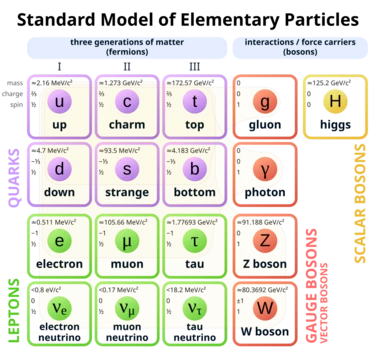
The Tevatron's most celebrated contribution to physics came in 1995, when researchers confirmed the existence of the top quark, the final fundamental fermion that the Standard Model had predicted. That discovery cemented the machine's place in the history of particle physics. A second landmark finding emerged much later: on July 2, 2012, the CDF and DØ experiment teams at Fermilab published results drawn from roughly 500 trillion proton-antiproton collisions accumulated since 2001. Their analysis indicated that the long-sought Higgs boson almost certainly existed, with a statistical confidence of 99.8 percent—a figure that was subsequently refined to exceed 99.9 percent. These two milestones, separated by nearly two decades, demonstrated that the Tevatron remained a productive scientific instrument well into its final operational years, even as a far more powerful successor was being commissioned in Europe.
From Shovel to Superconducting Magnets
The story of the Tevatron began on December 1, 1968, when ground was broken for the linear accelerator that would eventually feed the system. A year later, on October 3, 1969, Fermilab director Robert R. Wilson turned the first shovel of earth for the Main Accelerator Enclosure, the 6.3-kilometer ring that would form the backbone of the facility. By 1971, Wilson was already testifying before the Joint Committee on Atomic Energy that superconducting magnets could push energies far beyond what conventional magnets allowed, proposing they be installed in the same tunnel alongside the existing hardware. That vision launched the Tevatron project into a research-and-development phase spanning 1973 to 1979. In 1981 the conventional-magnet Main Ring was shut down so the new superconducting magnets could be fitted beneath it. The upgraded ring, nicknamed the "Energy Doubler," delivered its first 512 GeV beam on July 3, 1983, and by November 30, 1986, it had produced the first proton-antiproton collision at a combined energy of 1.8 TeV.
A Multi-Stage Journey to a Teraelectronvolt
Getting a particle to one teraelectronvolt was never a single leap; it was a relay race through several distinct machines. The journey started in a 750 keV Cockcroft-Walton pre-accelerator, which stripped electrons from hydrogen gas to create negative ions and then accelerated them with a positive voltage. Those ions entered a 150-meter linear accelerator where oscillating electric fields pushed them to 400 MeV. After passing through a thin carbon foil that removed the extra electrons, the now-bare protons were handed to the Booster, a small circular synchrotron in which they circled up to 20,000 times to reach roughly 8 GeV. From there the Main Injector—completed in 1999—took over, accelerating protons to 150 GeV or producing 120 GeV protons destined for the Antiproton Source, where they smashed into a nickel target to spawn antiprotons collected in an accumulator ring. Both particle species were then injected into the 6.28-kilometer Tevatron ring for their final acceleration to the full 1 TeV.
Sunset, Successor, and a Possible Second Life
The Tevatron's final day of operation was September 30, 2011. The decision to shut it down was driven by two converging pressures: shrinking federal budgets and the fact that CERN's Large Hadron Collider, which had begun running in early 2010, offered capabilities the Tevatron could not match. The LHC was designed for two 7 TeV beams—seven times the energy per beam at the Tevatron—and by the close of 2011 its luminosity had already reached roughly ten times the Tevatron's peak of 4×10³² cm⁻² s⁻¹. The Tevatron had been completed in 1983 for $120 million and had received substantial upgrade investments over its 28-year run, including the $290 million Main Injector built between 1993 and 1999. Yet even in retirement, the machine is not entirely finished. Fermilab has indicated that the main ring will likely be repurposed for future experiments, and individual components may be transferred to other accelerator facilities, giving the hardware a second career in the global particle-physics landscape.
Frequently Asked Questions
How does the Tevatron compare to the LHC?
The Tevatron held the record for the highest-energy collider on Earth until CERN's Large Hadron Collider began operations, after which the LHC surpassed it by a wide margin.
Did the Tevatron do anything with the Higgs boson?
Yes—its CDF and D0 detectors reported intriguing excesses in Higgs-boson search channels in the years before 2012, providing important constraints and hints that the LHC would later confirm with the actual discovery.
More in Particle And Nuclear Physics 25-40
Elsewhere in the Particle And Nuclear Physics universe
Spotted an error? Know more?
This is a living reference — every entry is fact-audited, and reader corrections feed straight into our audit queue. Suggest an edit · See this site's audit record